Arctic Ocean sea ice diminishes to record lowArctic sea ice surpassed all previous records for the lowest absolute minimum summer extent in September 2007. The "stunning record low" of 4.13 million square kilometers was recorded by satellite images on September 16, according to the National Snow and Ice Data Center (NSIDC.org). The previous record, 5.32 million square kilometers, was measured on September 20-21, 2005. The loss of ice is roughly the size of Texas and California combined, or nearly five United Kingdoms. 2007 also saw the extended opening of the Northwest Passage through islands north of Canada for the first time. Since then the summer ice minimum has been slightly higher, but still well below the average from 1979 to the present. The NSIDC, which keeps satellite and direct measurements of the ice at both poles, says "Arctic sea ice reflects sunlight, keeping the polar regions cool and moderating global climate. According to scientific measurements, Arctic sea ice has declined dramatically over at least the past thirty years, with the most extreme decline seen in the summer melt season." The cold winter months re-freeze much of the ice, but over the same record period the thickness of this new ice has also been reduced. NSIDC says that even though the 2009-2010 winter ice formation covered a greater extent than in other recent winters, " temperatures over the central Arctic Ocean remained above normal and the winter ice cover remained young and thin compared to earlier years."
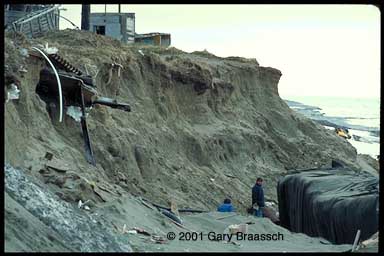
See http://nsidc.org Warming Winds, Rising Tides: Arctic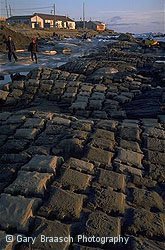 Sea level rise also affects the Arctic, where it is frequently combines with permafrost thaw to create severe erosion. The native village of Shismaref Alaska, a village of about 590 Inupiats perched on a sandy barrier island on the NW shore of Seward Peninsula, has failed to halt the rising Bering Sea. Shore erosion of the narrow spit has been severe since the 1950s, and protective armor and wire gabions have been ineffective. The town faces a decision to move inland, away from this traditional site. Townspeople voted in 2002 to move their village to higher, more protected ground away from the ocean. Sea level rise also affects the Arctic, where it is frequently combines with permafrost thaw to create severe erosion. The native village of Shismaref Alaska, a village of about 590 Inupiats perched on a sandy barrier island on the NW shore of Seward Peninsula, has failed to halt the rising Bering Sea. Shore erosion of the narrow spit has been severe since the 1950s, and protective armor and wire gabions have been ineffective. The town faces a decision to move inland, away from this traditional site. Townspeople voted in 2002 to move their village to higher, more protected ground away from the ocean.
 |
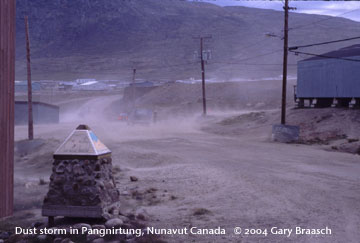
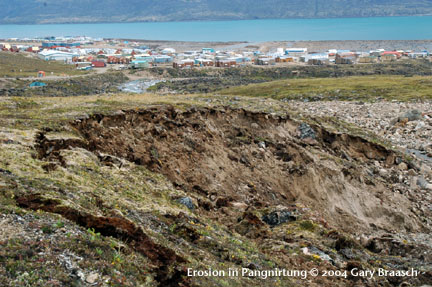
| On Baffin Island, across from Greenland in Nunavut, Canada, the loss of ice and permafrost is affecting daily life of native Inuits. Winter hunting and fishing is limited severely by loss of ice. In summer, permafrost is thawing, creating more erosion, and ice that once covered the surrounding mountains year long is nearly all melted. Elders in the village of Pangnirtung report that winds have shifted and winters are getting much shorter -- observations that weather records confirm. |

 E
E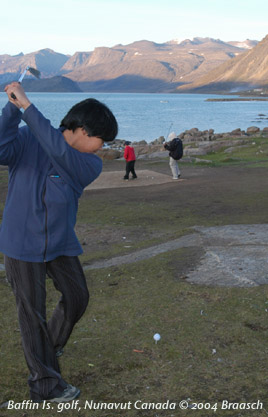


 Angry Birds Rio Click here to play this game
0 comments:
Post a Comment